Last updated November 25, 2026
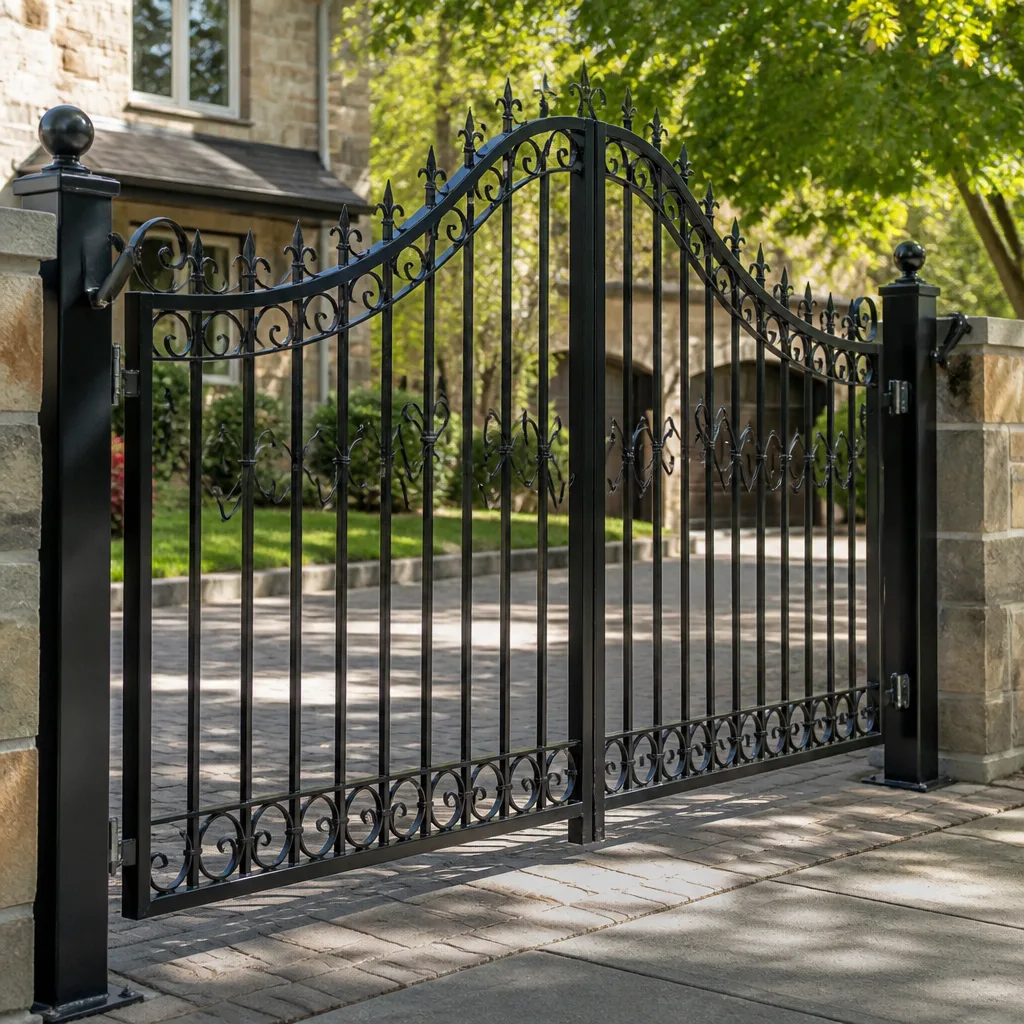 Wrought iron
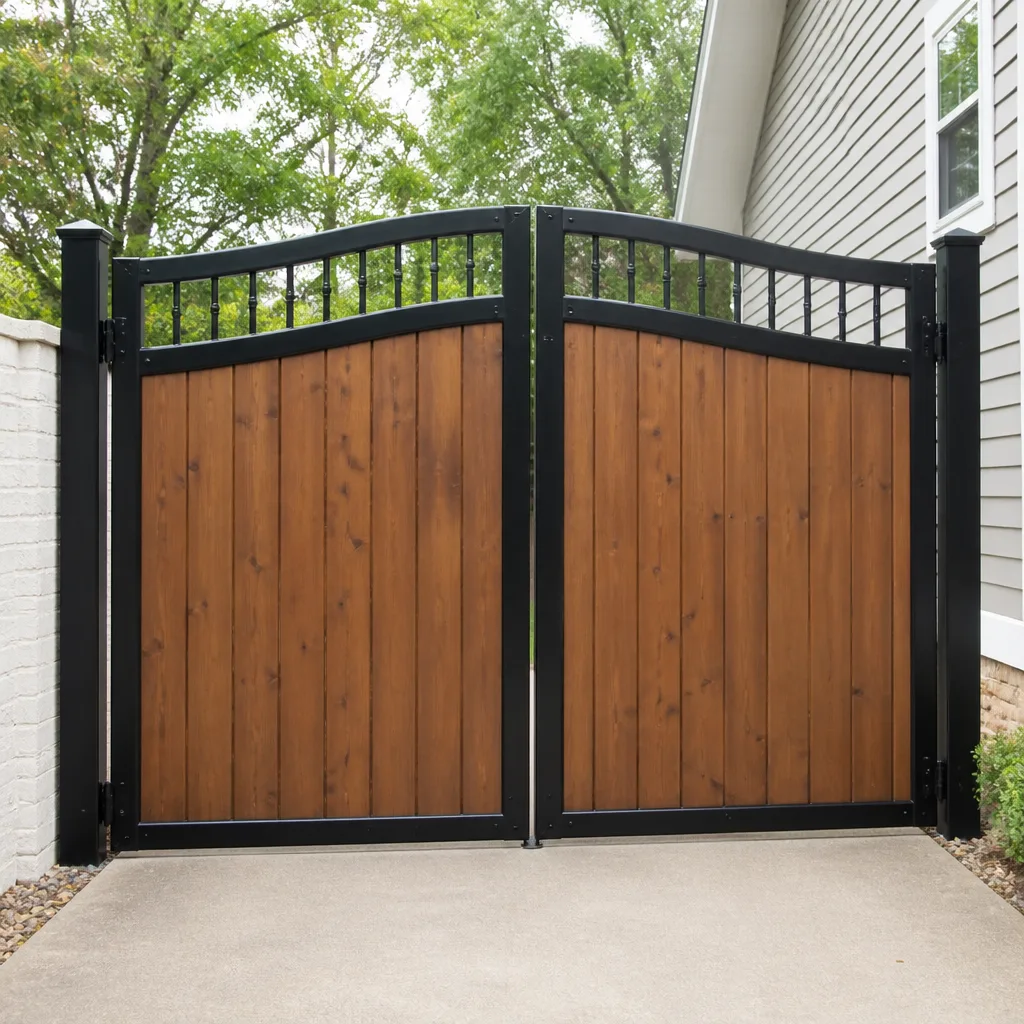 Wood & steel frame
 Farm & ranch
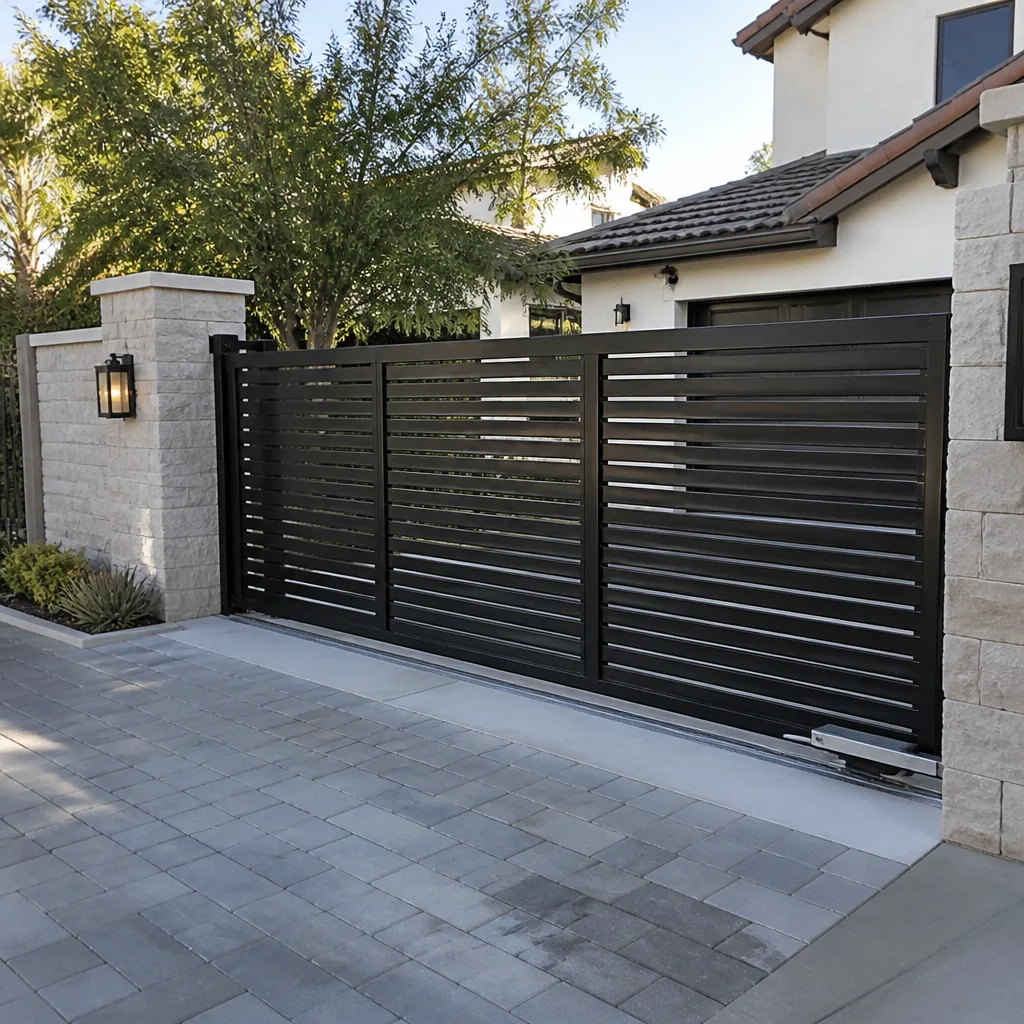 Sliding driveway gates
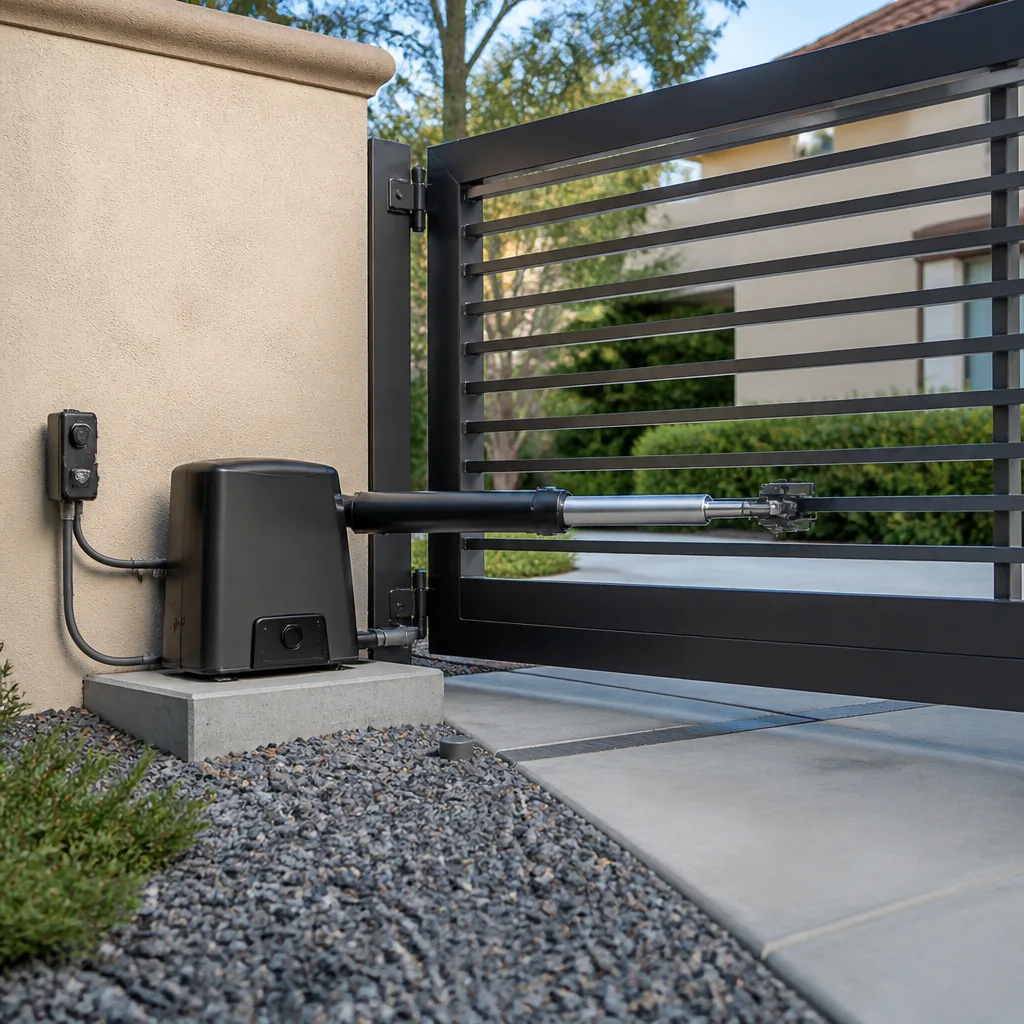 LiftMaster operators
Free on-site gate assessment - hinges, posts, and your LiftMaster or Nice gate operator checked before anything is quoted
The assessment is free and the quote is the invoice.
Get your free estimateDIY vs Professional Gate Repair: The St. Johns Homeowner’s Decision Guide
Replacing a gate latch is a legitimate DIY job. Adjusting the close-force setting on an automated operator is not, even though both feel like small tasks when you’re standing at the gate with a screwdriver. The difference isn’t skill. It’s liability. A latch that fails is a nuisance; an operator adjusted wrong can create an entrapment hazard that violates UL 325 and leaves you exposed if someone gets hurt. In St. Johns, where automated driveway gates are common on both residential lots and HOA-managed entries, that distinction matters more than most homeowners realize. This guide breaks gate repair down task by task so you can decide what’s safe to handle and what belongs with a specialist.
Quick Answer
Some gate repairs are genuinely homeowner-appropriate: latches, hinges, visual inspections, cleaning tracks, and documenting symptoms before you call. Others, including anything involving the operator’s force settings, wiring, control boards, safety sensors, or loop detectors, require a trained technician because a mistake creates a code compliance problem and a liability exposure you can’t undo. In St. Johns, the smart split is mechanical cosmetics on your side, powered systems on ours.
Styles & brands we work with
- Wrought iron
- Wood & steel frame
- Farm & ranch
- Sliding driveway gates
- LiftMaster operators
Table of Contents
- The Real Decision Framework: Liability, Parts, and Task
- Gate Repairs That Are Genuinely DIY-Safe
- Repairs That Require a Licensed Electrician
- Repairs That Require a Certified Operator Technician
- How DIY Repair Affects Your Manufacturer Warranty
- Tools and Parts Access: What You Can Actually Source
- The Hidden Cost of a DIY Misdiagnosis
- The Gray Zone: Prep Work That Reduces Your Bill
The Real Decision Framework: Liability, Parts, and Task
Most DIY-versus-professional advice for gate repair centers on skill level, and that’s the wrong axis. Plenty of St. Johns homeowners are mechanically capable. The question is whether the task you’re about to do carries consequences beyond the gate itself: code compliance, insurance exposure, warranty coverage, and whether the part you need is even available to you.
We think about gate work in three layers. Each layer has a different answer to “should I do this myself?”
- Mechanical and cosmetic. Latches, hinges, gate sag, hardware tightening, rust treatment. Low liability, widely available parts, reasonable DIY territory for a careful homeowner.
- Line-voltage electrical. Anything upstream of the operator’s low-voltage control side: the power run to the gate, a junction box, a breaker. This is licensed electrician work, full stop, and it’s separate from gate technician work.
- Operator and access control. Force settings, safety sensors, control boards, loop detectors, keypads, intercoms. This is where a certified operator technician matters regardless of how handy you are, because the failure mode is injury or a non-compliant installation, not a stuck gate.
For St. Johns specifically, the automated-gate population skews toward LiftMaster and FAAC residential operators on driveways, with Mighty Mule showing up on rural-edge properties. All three have documented safety requirements around entrapment protection, and all three respond badly to guesswork. Sorting your repair into the right layer is the whole decision.
Gate Repairs That Are Genuinely DIY-Safe
A meaningful share of gate problems are mechanical, low-risk, and don’t touch the powered system at all. These are the repairs where doing it yourself is a reasonable call, provided you use the right hardware and check your work.
- Replacing a latch or catch. The most common legitimate DIY repair. Match the throw and the mounting pattern, and confirm the gate still latches cleanly through a full swing.
- Tightening or replacing hinge hardware. Loose hinges cause sag, and sag causes drag. Straightforward work with basic tools.
- Adjusting a sagging swing gate. Usually a hinge or post issue rather than a gate issue. Shim, tighten, or replace the hinge before assuming the gate itself is warped.
- Clearing debris from a slide gate track. A track full of grit, leaves, and gravel is the single most common non-electrical cause of a slide gate that stalls. Clean it, then watch whether the gate runs smoothly.
- Treating rust and repainting. Cosmetic, protective, and well within homeowner reach.
- Visual inspection. Walking the gate line, checking for loose bolts, listening for new noises, watching for drag. Free, and it makes any later professional visit faster.
One caution even on the safe list: on a slide gate, a gate that has come off its track or a roller carriage that has failed is not a DIY fix. Those panels are heavy, and a panel that shifts while you’re working under it can crush a hand or a foot. If the gate has left the track, stop and call.
Repairs That Require a Licensed Electrician
There’s a genuine dividing line in gate work that many homeowners don’t know exists: the power side and the control side are different trades. The line-voltage feed to your operator, the disconnect, any junction box, and the breaker are electrician work. The operator itself, its low-voltage control wiring, its sensors, and its programming are gate technician work.
In St. Johns, that distinction shows up most often on older driveway gates where the original power run was done years ago and now needs attention, or on new installations where a homeowner is planning the electrical scope. Some situations that need a licensed electrician:
- The operator has no power at all and the breaker is fine.
- You need a new circuit run to a gate that has never been powered.
- There’s visible damage to conduit, a junction box, or exposed wiring at the gate.
- You’re adding a second operator or upgrading to a higher-draw unit and the existing circuit needs review.
We flag this because it’s a frequent source of confusion and wasted money. A homeowner who calls a gate company for a dead operator sometimes needs an electrician first, and a homeowner who calls an electrician for a gate that won’t close sometimes needs us. Describing the symptom accurately on the phone saves a visit either way. If you’re not sure which side of the line you’re on, call and describe what’s happening; we’ll tell you honestly whether it’s a gate issue or an electrical one.
Repairs That Require a Certified Operator Technician
This is the category where DIY becomes a bad financial bet even for capable adults. Automated gate operators are designed around entrapment protection, and the settings that make that protection work are exactly the settings a homeowner is most likely to change without understanding the consequence.
Tasks that belong with a trained operator technician, on any brand:
- Adjusting close force or open force settings. Force settings are calibrated against the entrapment protection standard. Set too high, the gate won’t reverse on contact. Set too low, it reverses on wind and never closes. Getting this right requires the right measuring approach and an understanding of how the operator’s safety circuit behaves.
- Safety sensor and photo-eye alignment or replacement. A misaligned or bypassed sensor is the most common cause of a gate that won’t close, and the most common cause of an unsafe gate that does close.
- Control board diagnosis and replacement. Boards fail in ways that mimic other problems. Swapping a board on a guess is expensive and rarely solves the actual fault.
- Loop detector work. Vehicle loops on St. Johns driveway and HOA entries detect a car and hold the gate open or trigger it. A failing loop reads as an operator problem until you test it properly.
- Keypad, intercom, and access control programming. Entry systems sit between gate hardware and security technology, and programming errors lock people out or leave the gate open.
- Operator replacement or new installation. Sizing, mounting, and commissioning an operator is a measured, scheduled job, not a same-day repair.
We work on LiftMaster and FAAC systems regularly, along with Elite, Mighty Mule, BFT, Linear, Viking, Ghost Controls, and DoorKing, and the pattern holds across all of them: the mechanical gate is forgiving, the powered system is not. If your repair lands in this list, it’s a technician job.
How DIY Repair Affects Your Manufacturer Warranty
Manufacturer coverage on gate operators is conditional, and the conditions usually include installation and service by a qualified technician. Open the operator housing and start adjusting or replacing components yourself, and you risk having a claim denied on a unit that’s still under coverage.
This matters most on the brands common in St. Johns. LiftMaster residential operators carry warranty terms tied to proper installation and service, and a control board failure after a homeowner has been inside the housing is an easy denial. FAAC operators have similar expectations, and their control logic is less forgiving of improvised settings. Viking units are durable but their warranty language still assumes qualified service. On a Mighty Mule on a rural-edge property, the calculus is sometimes different because the unit cost is lower and a homeowner may reasonably choose to replace rather than repair, but that’s a budget decision, not a warranty one.
Before you open anything, ask two questions: is this unit still under manufacturer coverage, and does the repair require opening the operator housing? If the answer to both is yes, the warranty exposure usually outweighs the DIY savings. A technician visit costs less than a denied board replacement.
Tools and Parts Access: What You Can Actually Source
Parts access is the quiet reason a lot of gate DIY stalls halfway through. Some components are available at any hardware store. Others are dealer-account items, and no amount of mechanical skill gets around a part you can’t buy.
- Readily available: latches, hinges, bolts, roller wheels for common slide gates, rust treatment, paint, basic hand tools.
- Sometimes available, needs matching: photo-eye sets, keypads, remote controls. Brand and model matching matters, and a near-match often doesn’t work.
- Dealer or distributor territory: control boards, loop detectors, operator-specific sensors, brand-specific mounting hardware, and most internal operator components.
The practical upshot: if your repair needs a part from the third list, DIY isn’t really on the table no matter how confident you are. Ordering the wrong board for a LiftMaster or a FAAC and discovering it doesn’t fit is a common and expensive mistake. We carry access to the parts because we work on these systems every day; that access is part of what a professional visit buys.
The Hidden Cost of a DIY Misdiagnosis
A gate symptom rarely names its own cause. A gate that won’t close can be a misaligned photo-eye, a failing loop detector, a bad control board, a bound hinge, a track obstruction, or a force setting that’s drifted. Replacing parts on a guess gets expensive fast, and it occasionally makes the real problem harder to find afterward.
We’ve seen this pattern in St. Johns more than once. A homeowner replaces a control board because the gate won’t close; the gate still won’t close; the actual fault was a photo-eye that got bumped. Now there’s a new board in the system, the old board is gone, and the technician has to establish a baseline from scratch. The wasted board is the visible cost. The diagnostic time is the hidden one.
There’s a cheaper path. Before you buy anything, spend ten minutes documenting what the gate actually does:
- Does it fail to open, fail to close, or fail both ways?
- Does it move partway and stop, or not move at all?
- Does the keypad, remote, or intercom still trigger it?
- Does anything change in wind, rain, or cold?
- Is there any sound from the operator, or is it silent?
Those five answers, written down, often cut a diagnosis from an hour to fifteen minutes. That’s real money, and it costs you nothing.
The Gray Zone: Prep Work That Reduces Your Bill
There’s a wide middle ground between doing the repair and paying full freight for a technician’s discovery time. A homeowner who does the prep work without touching the mechanical or electrical system gets a faster, cheaper visit and a better outcome.
- Clean the gate line. Clear debris from the track, sweep the swing path, and trim vegetation away from photo-eyes. A surprising share of “gate won’t close” calls are a leaf on a sensor.
- Measure and photograph. Gate width, gate height, gate weight if known, the operator’s brand and model plate, and photos of the operator, the hinges, and the sensor positions. Photos save a return trip when a part needs ordering.
- Document the symptoms. The five-question list above, written down. Include when the problem started and whether anything changed around that time.
- Gather your paperwork. If the gate was installed or serviced before, have the model information and any prior service records ready. If it’s still under manufacturer coverage, say so up front.
- Check the obvious power side. Confirm the breaker hasn’t tripped and that the operator has power. That’s not electrician work; it’s just looking.
- Clear access. Make sure a technician can reach the operator and both sides of the gate.
What not to do in the gray zone: don’t open the operator housing, don’t loosen or remove safety sensors, and don’t start turning adjustment screws to “see what happens.” Each of those moves a task from the cheap side of the line to the expensive one.
Common Mistakes to Avoid
- Bypassing or taping over a photo-eye to get the gate to close. It works, briefly, and it removes the entrapment protection the operator was designed around. If someone is injured, that modification is the first thing anyone looks at.
- Raising the force setting to stop nuisance reversals. A gate reversing on wind is telling you something. Cranking the force hides the symptom and pushes the gate toward a non-compliant state.
- Ordering a control board before testing anything else. Boards are the most-replaced and least-often-guilty component in gate repair. Test the sensors and the loop first.
- Assuming a gate contractor handles the electrical run. In St. Johns, a new power run is licensed electrician work, separate from the gate technician’s scope. Confirm who’s doing what before work starts.
- Ignoring a slide gate that’s come off its track. Heavy panels can crush. That’s a call-us-now situation, not a weekend project.
- Opening a unit that’s still under manufacturer coverage. A denied warranty claim on a LiftMaster or FAAC board usually costs more than the service visit would have.
- Letting a small hinge problem become a structural one. Sag that goes unaddressed for a season can stress the post and the gate frame. Fix the hinge while it’s still a hinge.
See the difference
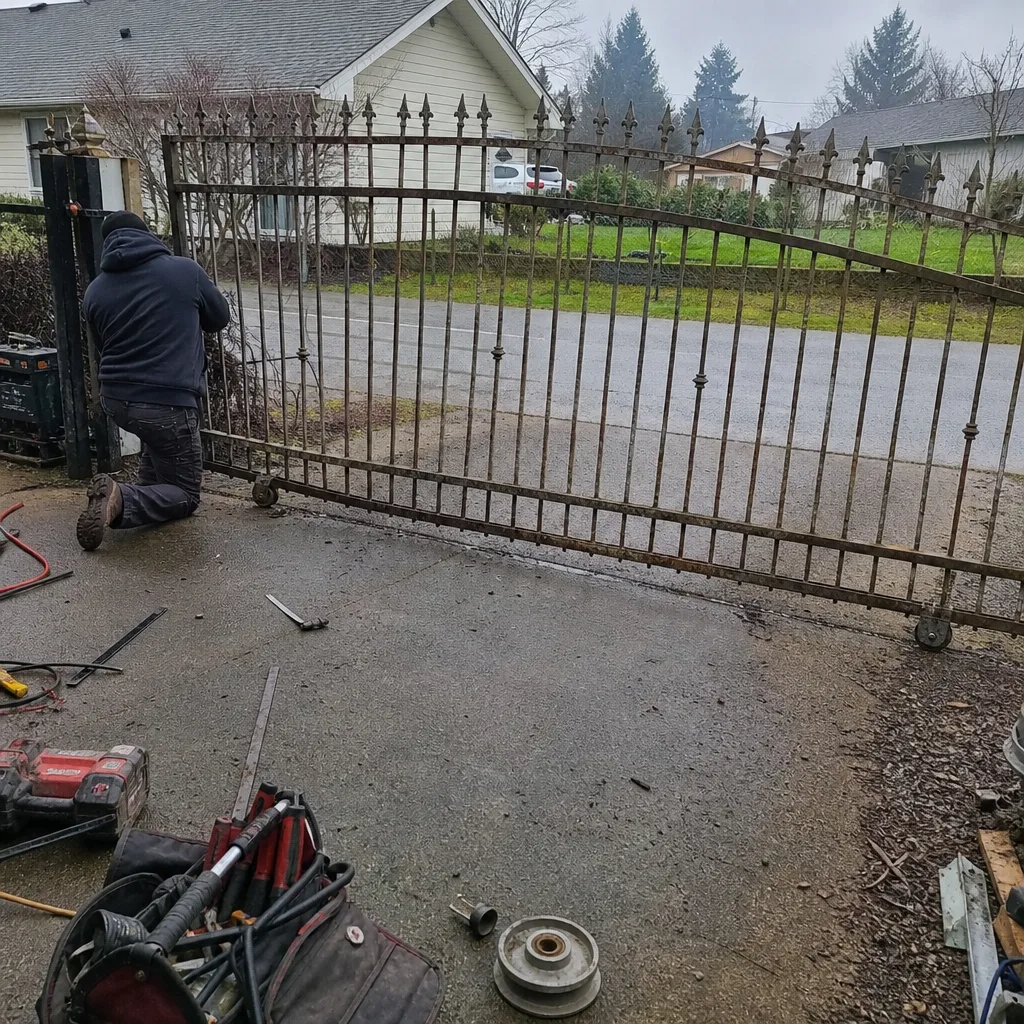 Before
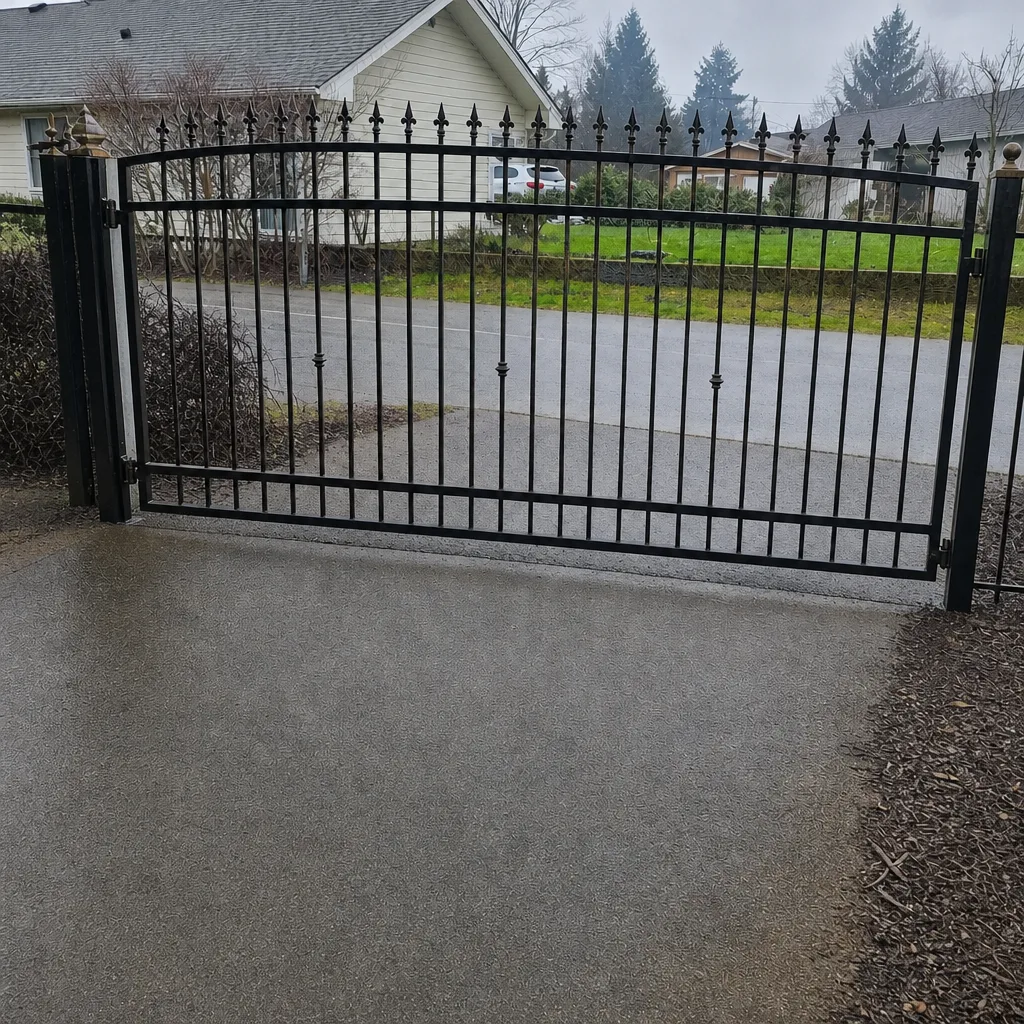 After
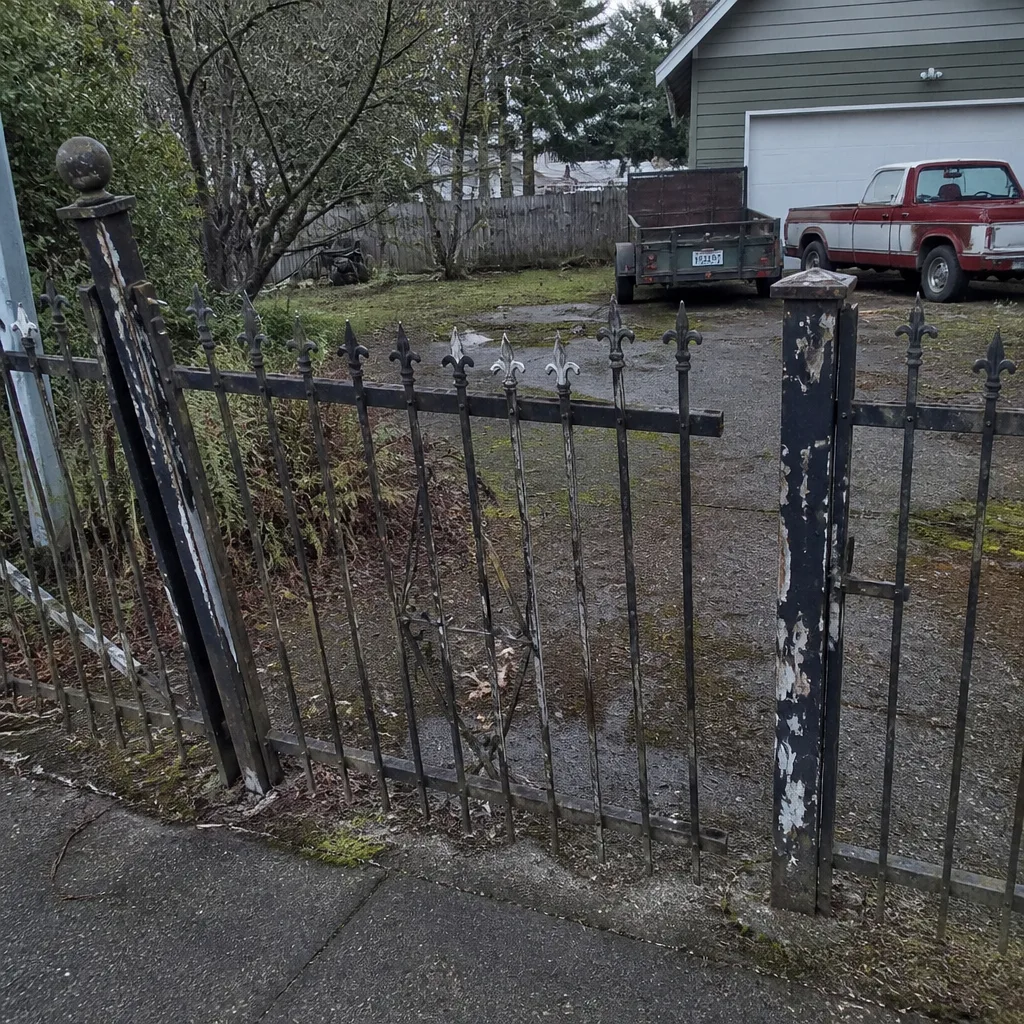 Before
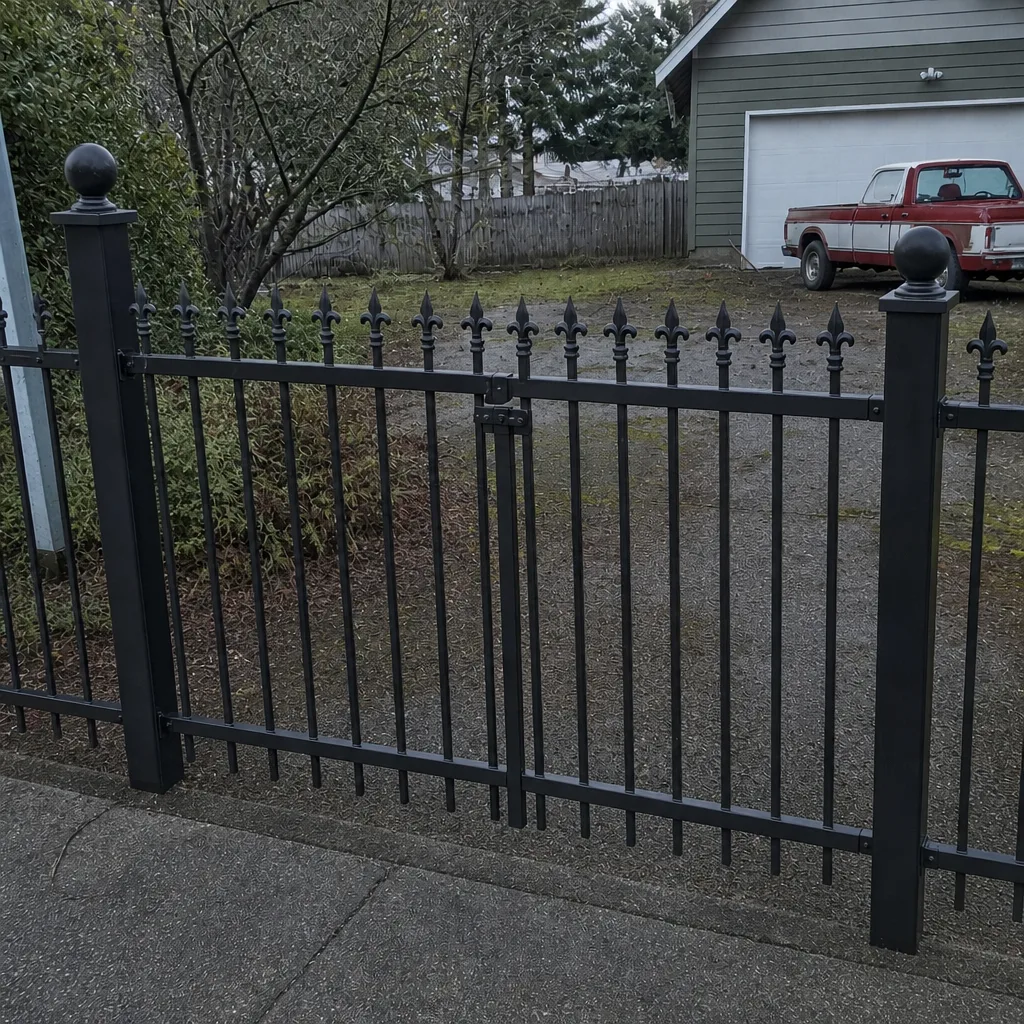 After
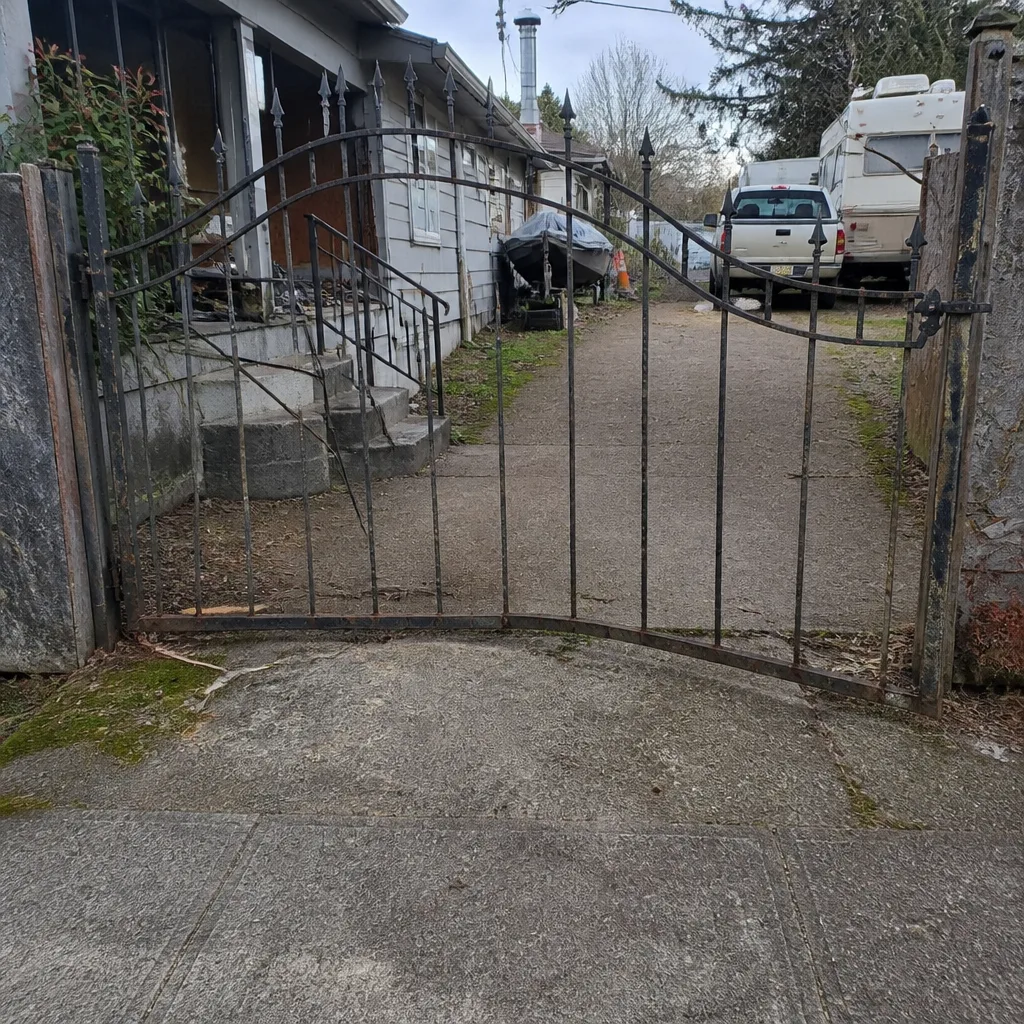 Before
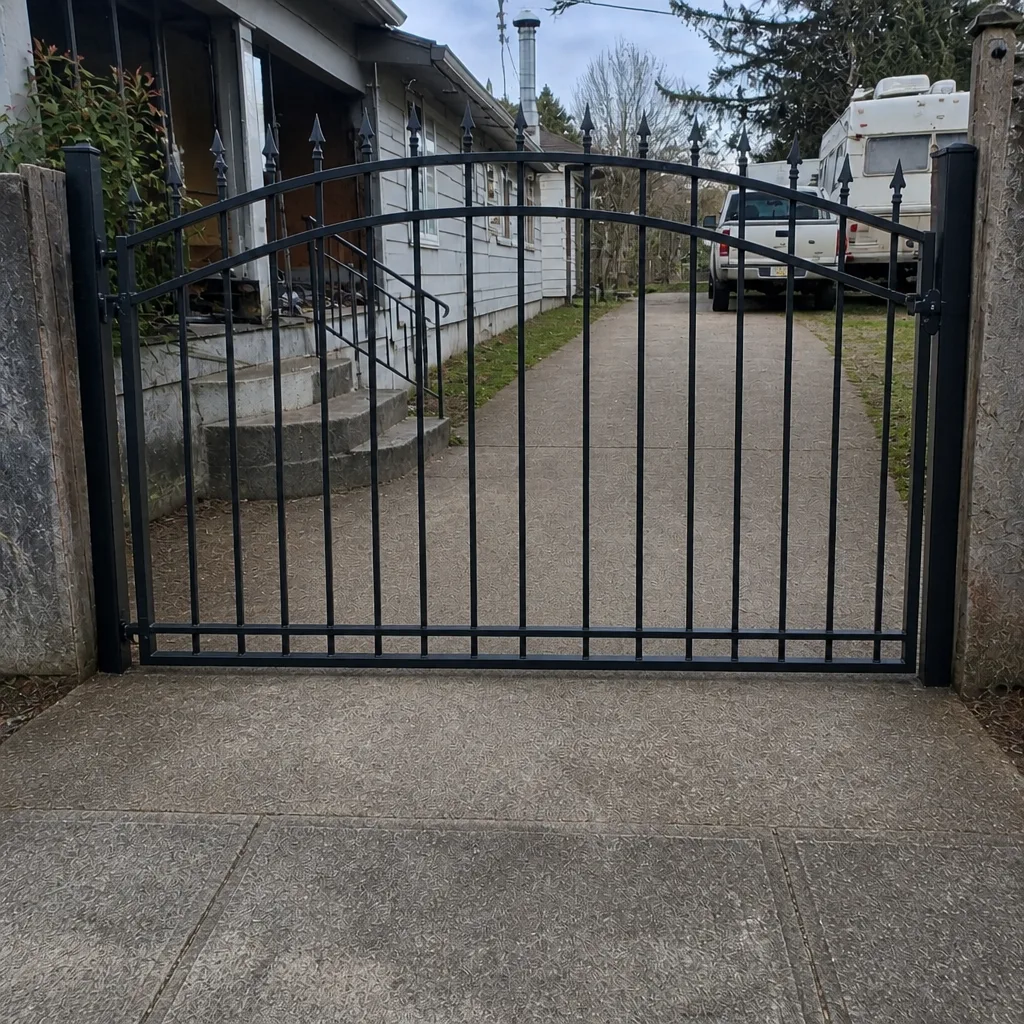 After
When to Call a Professional
Call a professional when the repair touches the operator, the sensors, the control board, the loop detector, the access control system, or the line-voltage power. Call when the gate has left its track, when a heavy panel has shifted, or when you can’t identify the symptom with confidence. Call when the unit is still under manufacturer coverage and the repair requires opening the housing. And call when you’ve already replaced a part and the gate still isn’t working, because a fresh set of eyes saves more than it costs at that point.
Our technicians have up to 11 years of experience, and every service call is a gate call. If you’re in the gray zone and not sure which side you’re on, describe the symptom and we’ll tell you honestly. Gate Repair St. Johns offers free estimates in St. Johns, call (833) 513-9268. You can also read more about gate repair or, if you’re weighing a replacement instead of a fix, about gate installation.
Frequently Asked Questions
Yes. A gate latch is one of the genuinely DIY-safe repairs, provided you match the throw and mounting pattern and confirm the gate still latches cleanly through a full swing. If the gate also sags or drags, fix the hinge first, or the new latch will wear out the same way. Call (833) 513-9268 if the latch problem turns out to be an alignment problem instead.
No. Close force and open force settings are calibrated against the entrapment protection standard, and setting them wrong creates a UL 325 non-compliance problem and voids your liability coverage if someone gets hurt. It’s a technician task on every brand, including LiftMaster and FAAC. Call (833) 513-9268 for an exact quote, estimates are free.
It can. Manufacturer coverage typically assumes installation and service by a qualified technician, and a claim on a board or operator component after a homeowner has been inside the housing is easy to deny. Before you open anything, confirm whether the unit is still under coverage. If it is, the service visit is usually the cheaper path.
It depends where the power stops. If the breaker is fine and the operator is dead, that’s a gate technician diagnosis. If the power run, conduit, or junction box needs work, that’s a licensed electrician. Describe the symptom on the phone and it’s usually clear within a minute which one you need.
No, we’re closed Saturday. We’re open Sunday through Friday, 7am to 7pm. If your gate fails on a Saturday, call and we’ll book you in for Sunday.
Cleaning the track and the swing path, photographing the operator’s model plate and the sensor positions, and writing down exactly what the gate does and when it started. Those steps cut diagnostic time without touching the mechanical or electrical system. Have any prior service records ready too. Call (833) 513-9268 to book a free estimate.
The Bottom Line
The DIY-versus-professional question for gate repair comes down to three things: liability exposure, parts access, and the specific task. Latches, hinges, track cleaning, rust treatment, and documentation are legitimate homeowner work. Force settings, safety sensors, control boards, loop detectors, access control programming, and anything on the line-voltage side belong with a technician or a licensed electrician. If the unit is still under manufacturer coverage, the warranty math usually settles it. Our technicians have up to 11 years of experience, we work on the brand you already have, and from the motor to the keypad we handle the whole system. Call (833) 513-9268 for a free estimate in St. Johns.
For the full picture of what we cover, start at Gate Repair St. Johns. If the diagnosis points at the operator, read about gate motor & opener service.
Written by the team at Gate Repair St. Johns.